
2026-08-19 · Chris Miller
How Storm Damage Can Affect Outdoor Condenser Units
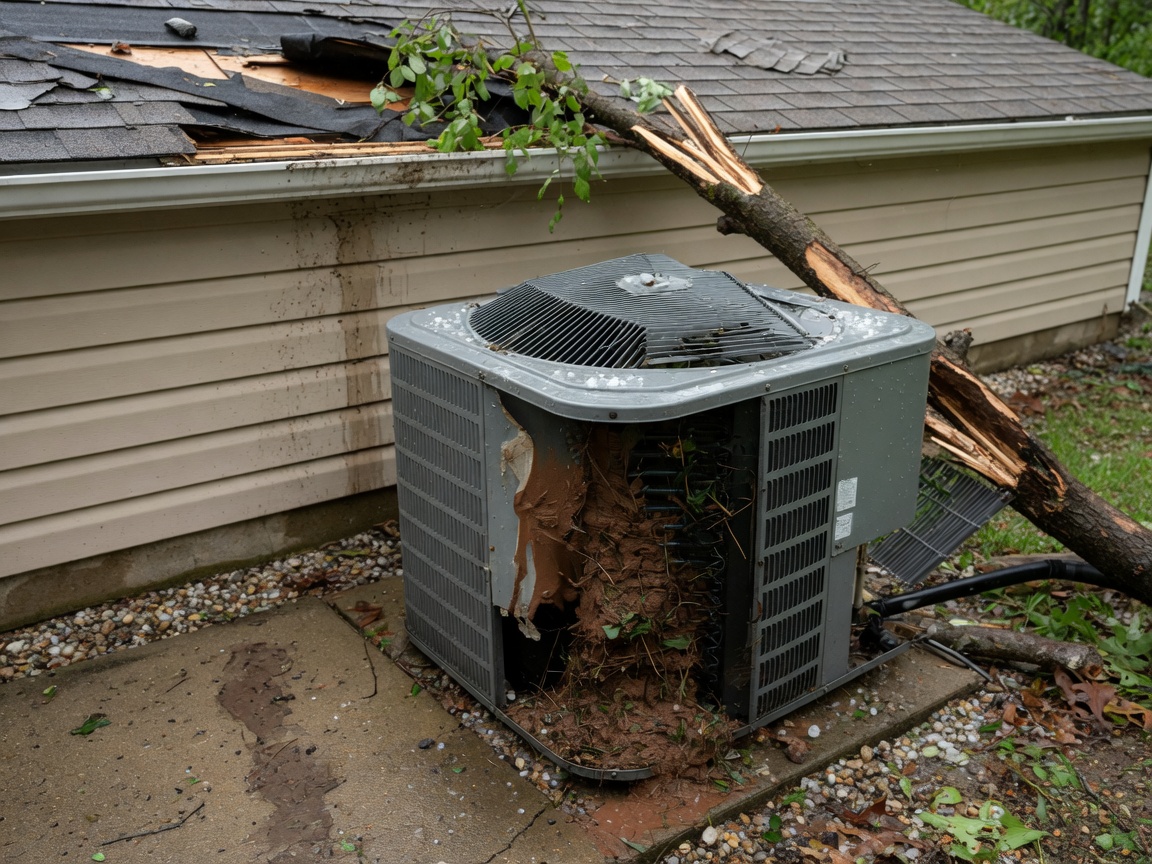
Storms in Rutherford County often leave outdoor condenser units with bent fins, dented coils, or electrical shorts that reduce cooling capacity by 20-40% until repaired. Lascassas homes near open fields see more debris impact than those in Murfreesboro subdivisions because wind funnels across farmland before hitting equipment pads.
High Winds and Flying Debris
Gusts above 50 mph routinely loosen mounting bolts and drive leaves, sticks, and gravel into the fan blades of units placed on the north or west sides of Lascassas properties. Once debris wraps around the fan motor, it creates vibration that can crack solder joints on the capacitor within one or two seasons. Technicians working in the area commonly find that units installed on raised pads 18-24 inches above grade suffer less base flooding but still collect branches that block airflow across the condenser coil. After a storm, clearing loose material before restart prevents the compressor from running hot and shortens its typical 10-15 year lifespan in the local humid subtropical climate.
Hail and Physical Coil Damage
Quarter-sized hail that falls during spring and summer cells in Rutherford County flattens aluminum fins and punctures copper tubing on older condenser units. A single storm can reduce heat transfer efficiency enough to raise indoor temperatures 4-6 degrees on peak humidity days. Homeowners in Lascassas and nearby Lebanon often notice the unit running longer cycles after hail events because the damaged surface area no longer rejects heat effectively. Straightening or replacing the coil assembly restores performance, but units older than 12 years frequently need full replacement once multiple rows of fins are compromised.
Lightning and Electrical Component Failure
Lightning strikes within a half-mile radius induce voltage spikes that fry contactors, control boards, and fan motors on units without surge protection. In Lascassas, where many homes sit on larger lots with overhead power lines, these surges reach the disconnect box before the utility breaker trips. After such an event the compressor may hum but fail to start, or the unit may short to ground and trip the main panel. Checking the capacitor and contactor with a multimeter reveals the damage quickly, and replacing just the failed electrical parts costs far less than waiting for a full compressor failure later in the season.
Water Intrusion and Corrosion After Heavy Rain
Torrential rain combined with mild winter temperatures in Rutherford County allows water to pool inside the base of condenser units that lack proper drainage slopes. Standing water accelerates rust on the bottom pan and can wick into the compressor terminals, creating ground faults that appear weeks after the storm. Properties along lower elevations near the Stones River tributaries see this issue more often than hilltop homes in Murfreesboro. Drying the unit thoroughly and applying dielectric grease to connections prevents repeat failures during the next humid summer stretch.
After any storm, a systematic check of the outdoor unit followed by an Air Conditioning Repair visit keeps small issues from becoming compressor replacements. Residents who also review How To Check Your Thermostat Settings After A Power Outage avoid running the system on incorrect settings that compound storm-related stress. When damage requires immediate attention outside normal hours, Emergency HVAC Services crews familiar with Lascassas terrain respond faster than general contractors from farther counties.