
2026-08-19 · Chris Miller
Spring Pollen And How It Affects Indoor Air Quality
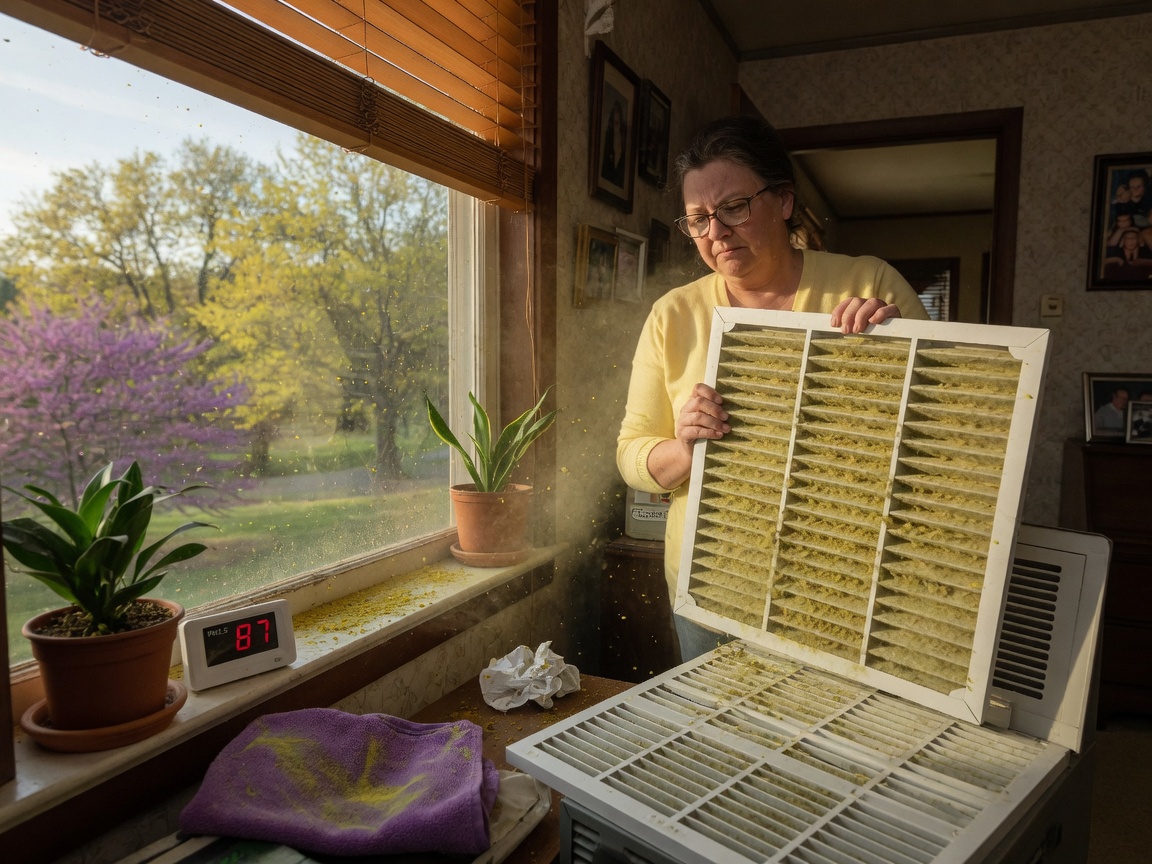
Spring pollen in Lascassas can raise indoor allergen concentrations two to five times above outdoor levels during peak March through May weeks when oak, cedar, and grass release heavy loads into Rutherford County air. Homes with older single-pane windows and unsealed duct joints allow more particles inside, especially on windy days common near Murfreesboro and Lebanon. Once inside, pollen settles on surfaces and gets pulled into return vents where standard filters often miss the smallest grains.
Pollen Entry Points in Local Housing Stock
Lascassas properties built before 1990 frequently feature loose-fitting windows and crawl-space ducts that pull in outdoor air during mild winter-to-spring transitions. Humid subtropical conditions keep pollen grains viable longer because moisture prevents them from drying out and breaking down quickly. Residents in neighborhoods surrounding the Lascassas crossroads report visible yellow dust on vehicles and porches by early April, and the same layer coats indoor registers when systems run continuously. Proper sealing at duct joints and upgraded filtration reduce the amount that travels through living spaces.
HVAC Filtration and Airflow Realities
Standard one-inch fiberglass filters capture only larger pollen particles while finer grains pass through and recirculate. Upgrading to a MERV-13 pleated filter in a properly sized return increases capture without starving the blower motor when the system is serviced regularly. In Rutherford County homes, duct leaks near attics or crawl spaces pull extra pollen-laden air during spring temperature swings, so sealing those gaps before allergy season starts prevents unnecessary loading. Indoor Air Quality Services address these exact pressure and filtration issues common to local equipment.
Seasonal Moisture and Secondary Effects
Mild winters followed by sudden warm spells create rapid humidity spikes that make pollen stick to coils and drain pans. When the air conditioner later runs in humid subtropical summers, trapped pollen can support mold growth inside the cabinet if condensate drainage is slow. Homeowners who schedule Air Conditioning Maintenance before May avoid this compounding problem. Keeping the evaporator coil clean and the drain line clear limits the secondary allergen load that would otherwise blow through supply vents.
Filter Choices for High-Pollen Periods
Pleated filters rated MERV-11 to MERV-13 balance particle capture with airflow in most Lascassas systems. Changing the filter every 30 days during peak pollen release prevents restriction that forces the blower to work harder. Choosing The Right Filter For High Pollen Seasons explains how to match filter depth and rating to specific furnace or air-handler models found in the area. Homeowners who track outdoor pollen counts from local weather reports can time changes to the heaviest weeks rather than following a fixed calendar.
Practical Maintenance Steps Before Peak Season
Inspect and replace filters monthly from February through June. Check return-air grilles for gaps around the frame and seal with foam tape where needed. Have a technician verify static pressure across the coil after any filter upgrade to confirm the blower can still move the required airflow. These steps keep indoor pollen counts closer to outdoor background levels instead of allowing buildup inside the home. CMS Air Conditioning Heating Refrigeration remains available Monday through Friday from 8am to 5pm for filter questions or system checks.